Best Monitor Arms in 2026: 6 Arms Compared
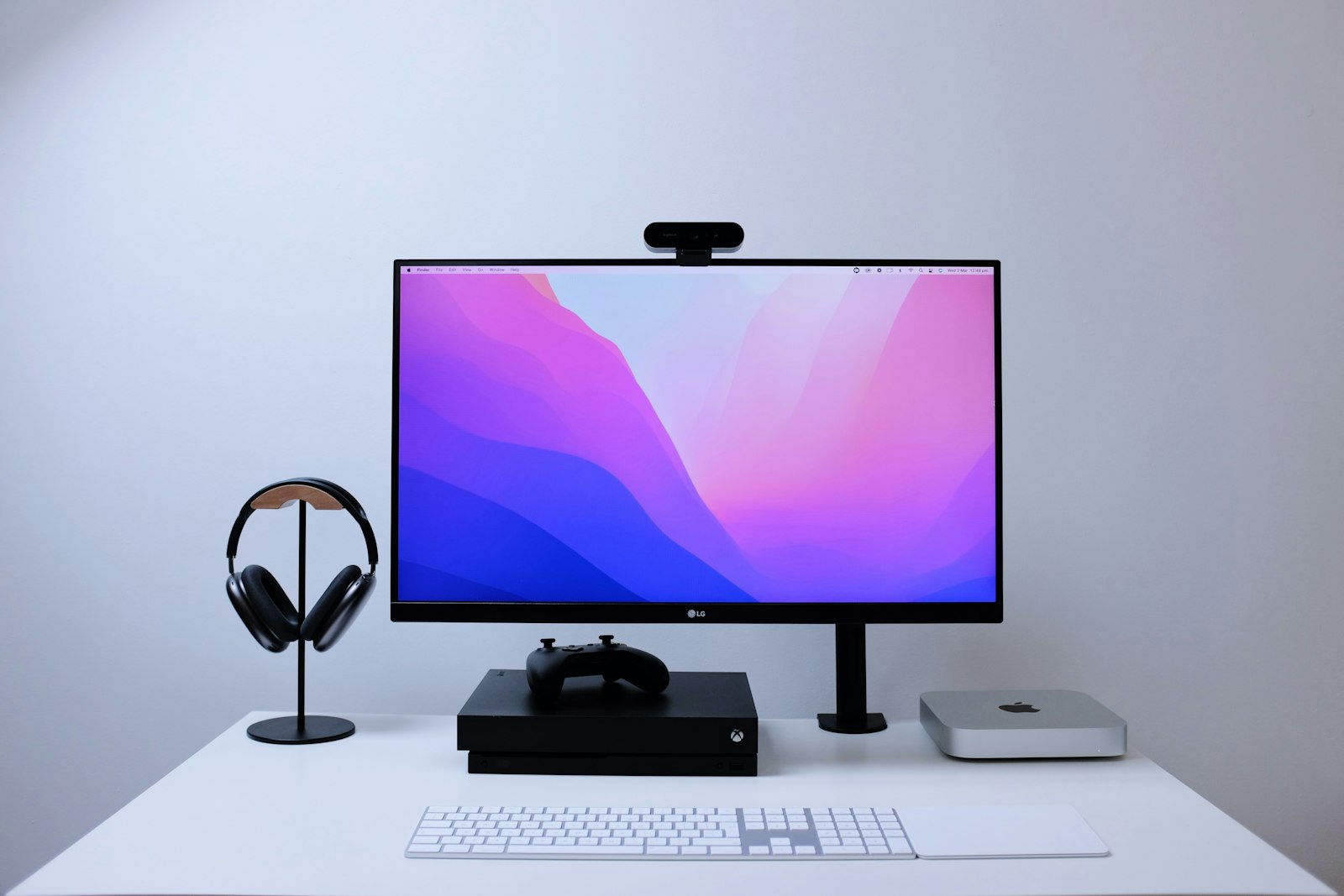
- Top pick: The Ergotron LX ($179) is our top pick on published specs: rated for monitors up to 25 lbs, with a 10-year warranty from the maker.
- Best value: The AmazonBasics Premium ($109) is similar in design to the Ergotron LX (we have not verified who makes it), with a 1-year warranty instead of 10 and a $70 lower price.
- Best budget dual: The VIVO Dual Arm ($40) is rated for two monitors up to 22 lbs each and is the lowest-priced dual arm here.
- How to choose: Check your monitor's weight without stand and choose an arm whose stated range covers that weight with some margin.
By Vincent Couey, DeskDeploy founder. Updated .
A monitor arm does two things that a stock monitor stand cannot. First, it lifts your screen to the correct ergonomic height, which should place the top of the display at or slightly below eye level. Second, it frees up desk space by eliminating the bulky base that came in the box. That extra 8-12 inches of depth makes a real difference on a 24-inch-deep desktop.
How we compare: this page compares maker-published specs (weight range, VESA pattern, warranty, price as listed) for six popular arms. We have not logged hands-on testing of these arms, so comments on feel and durability reflect general design differences, not our own measurements. Check current specs and prices with each maker or the Amazon listing before buying.
If you are building or upgrading a home office, a monitor arm belongs right after the desk and chair on your priority list. Our complete home office setup guide covers the full stack of gear you need.
On a sit-stand desk the specs that matter change: our standing-desk monitor arm comparison lines up published height travel, monitor weight window and clamp range.
The Quick Comparison
| Arm | Price | Type | Weight Cap. | Mount | Best For |
|---|---|---|---|---|---|
| Ergotron LX | $179 | Single, gas spring | 25 lbs | Clamp/Grommet | Overall best |
| AmazonBasics Arm | $109 | Single, gas spring | 25 lbs | Clamp/Grommet | Budget single |
| Humanscale M8.1 | $449 | Single, mech spring | Per maker spec sheet (not confirmed here) | Clamp/Bolt | Premium/heavy |
| VIVO Dual Arm | $40 | Dual, gas spring | 22 lbs each | Clamp/Grommet | Budget dual |
| North Bayou F80 | $45 | Single, gas spring | 19.8 lbs | Clamp/Grommet | Cheapest single |
| Mount-It MI-1772 | $70 | Dual, gas spring | 17.6 lbs each | Clamp | Light dual setup |
1. Ergotron LX - Best Overall ($179)
- Pros
- Full articulation at every joint, per the maker's listing
- 25 lb rating for screens up to 34 inches, per the maker's listing
- Integrated cable management channel keeps wires hidden
- Height, tilt, pan, and rotation adjustable, per the maker's listing
- 10-year warranty from the maker
- Cons
- $179 is steep when budget arms work fine for lighter monitors
- Tension must be set to match your monitor's weight (see the maker's instructions)
- Color options are limited (matte black, white, polished aluminum)
Best for: Anyone with a monitor weighing 12+ lbs or a 32-34 inch screen. On published specs the Ergotron LX is the strongest all-rounder here, and its 10-year warranty means you may only buy once.
Check price on Amazon →On published specs the Ergotron LX is the arm we would start with for most people: a 25 lb rating, a 10-year warranty and gas spring adjustment. We have not tested it ourselves, so treat this as a spec-based pick.
It uses a gas spring mechanism, which makers describe as allowing easy repositioning, and Ergotron lists an integrated cable channel rather than external clips.
One thing to know: gas spring arms generally need their tension set to match your monitor's weight, so read Ergotron's instructions for the adjustment tool and procedure before mounting.
2. AmazonBasics Monitor Arm - Best Budget Single ($109)
- Pros
- $70 less than the Ergotron LX at listed prices
- 25 lb capacity, the same rating as the LX
- Gas spring design, like the LX
- Prime shipping and Amazon's easy return policy
- Cons
- Only 1-year warranty vs Ergotron's 10-year warranty
- Only available in black (no white or aluminum option)
- Cable management may differ from the LX's integrated channel (not verified)
- Availability fluctuates, and it goes out of stock frequently
Best for: Anyone who wants an LX-style arm and does not care about the 10-year warranty. If $70 matters to your budget, this is the smart play.
Check price on Amazon →The AmazonBasics Premium looks similar in design to the Ergotron LX and has the same 25 lb rating, at $70 less. We have not verified who manufactures it, so this is a comparison of listed specs, not a claim about shared parts.
The clearest listed difference is the warranty, which drops from 10 years to 1 year. Cable management and finish may also differ from the LX, so check the listing. If an arm fails in year three, a 1-year term would have lapsed while Ergotron's 10-year warranty would still apply.
If you are furnishing a home office on a budget, put the $70 savings toward a better chair instead.
3. Humanscale M8.1 - Premium Pick ($449)
Update, 21 Nov 2026: Humanscale's own upgrade page lists the M8 Pro as the replacement for the M8.1 and says existing M8.1 orders and warranties stay valid. Humanscale's shop lists the M8 Pro from $642. The $449 price and the warranty on this card are from our earlier reading and have not been re-confirmed. See the weight and VESA fit page for the M8 Pro's stated figures.
- Pros
- Weight range per Humanscale's spec sheet (not confirmed here); marketed for heavy and oversized displays
- Self-adjusting counterbalance mechanism requires zero manual tension tuning
- Die-cast aluminum construction, per the maker's listing
- 15-year warranty
- Cons
- $449 is more than twice the Ergotron LX price
- Mechanical springs are generally described as stiffer to reposition than gas springs
- Clamp size and weight are not verified here; check the spec sheet before buying
Best for: Users with heavy or oversized monitors (32 inches+, 20+ lbs), professionals who want the absolute best, or anyone who values design aesthetics and is willing to pay for it.
Check price on Amazon →The Humanscale M8.1 is the arm you buy when you are done compromising. It uses a mechanical spring instead of gas, and Humanscale describes it as adjusting automatically to your monitor's weight, with no manual tension tuning.
Humanscale lists die-cast aluminum construction and a 15-year warranty. We have not handled this arm, so we cannot speak to its feel or wear.
Is it worth $449? For most people, no. The Ergotron LX costs $270 less at listed prices. But if you have a 40-inch ultrawide or a heavy professional display, the M8.1 is the arm positioned for that, so check Humanscale's spec sheet for its weight range.
4. VIVO Dual Monitor Arm - Best Budget Dual ($40)
- Pros
- $40 for a dual monitor arm is almost absurdly cheap
- 22 lb per-arm capacity handles most 27-inch monitors
- Steel construction, per the maker
- Cons
- Height adjustment requires loosening a bolt, not a smooth gas lift
- Cable management is basic, just Velcro straps and plastic clips
- May wobble during standing desk height transitions (not verified)
- Tension adjustment may be less refined than Ergotron's
Best for: Anyone running dual 24-27 inch monitors who does not want to spend $300+ on two Ergotron arms. The VIVO gets the job done at a fraction of the price.
Check price on Amazon →The VIVO STAND-V002 is a popular budget dual arm. At $40 for a dual arm, it is priced lower than most single-arm competitors.
VIVO lists steel construction. Each arm is rated up to 22 lbs and has full tilt, swivel, and rotation, which leaves headroom for most 24-27 inch monitors.
The downsides on paper: height adjustment is described as mechanical (loosen a bolt, slide, re-tighten) rather than gas-spring smooth, cable management is basic, and a budget arm may wobble after a standing desk stops moving. None of these look like dealbreakers at this price point.
5. North Bayou F80 - Cheapest Single Arm ($45)
- Pros
- $45 for a gas spring arm
- Full articulation, per the maker's listing
- Built-in USB port is a nice bonus (on USB models)
- Cons
- 19.8 lb limit rules out heavy 32-inch monitors and most ultrawides
- Budget gas springs can lose tension over time (not verified for this model)
- Clamp pads may mark soft wood desktops (not verified)
- Limited color options
Best for: Budget shoppers with a standard 24-27 inch monitor under 15 lbs. If your monitor is light and you want a genuine gas spring arm for under $50, the F80 fits on paper.
Check price on Amazon →The North Bayou F80 is where budget gas spring arms start. At $45, it costs less than a nice lunch for two, and its 4.4-19.8 lb rating fits light to mid-weight monitors. We have not tested it, and budget gas springs are generally less refined than premium arms.
The possible catch is longevity: budget gas springs are generally reported to lose some tension with frequent repositioning. We have not verified this for the F80.
6. Mount-It MI-1772 - Mid-Range Dual ($70)
- Pros
- Gas spring mechanism on both arms for only $30 more than the VIVO
- Independent arm height adjustment without tools
- Decent cable management clips included
- Cons
- 17.6 lb per-arm limit is tight for heavier 27-inch monitors
- Clamp-only mount (no grommet option)
- Less proven track record than VIVO (fewer reviews and years on market)
Best for: Dual monitor users who want gas spring adjustment on both arms but do not want to spend $300+ on two Ergotrons. A solid middle ground at $70.
Check price on Amazon →The Mount-It MI-1772 sits in the gap between the $40 VIVO and a pair of $180 Ergotrons. For $70, you get gas spring adjustment on both arms, meaning you can reposition each monitor independently with one hand. The VIVO requires loosening bolts to change height, which should make the Mount-It more convenient for anyone who switches between sitting and standing regularly.
The trade-off is weight capacity. At 17.6 lbs per arm, you need to check your monitor's weight carefully. Compare your own monitor's weight, from its spec sheet, with the arm's stated range; if it is close to the maximum there is little margin. For monitors under 14 lbs, the MI-1772 should sit comfortably within its rating.
Monitor Arm Buying Guide
Check your monitor's weight first
This is the single most important step. Look up your monitor's weight without stand (usually listed in the spec sheet as "net weight" or "weight without stand"). Then choose an arm whose stated weight range covers that number with some margin, and do not exceed the maximum the maker states.
Clamp vs grommet mount
Clamp mounts grip the edge of your desk and work on any surface 0.4 to 2.5 inches thick. They are removable and leave no permanent marks (with padding). Grommet mounts go through a hole in the desk, providing a more secure and stable connection but requiring you to drill a hole. If you are on a standing desk, clamp is usually the better choice because it allows repositioning.
Gas spring vs mechanical spring
Gas spring arms use a pressurized gas cylinder, similar to an office chair's height mechanism. They offer smooth, effortless movement and are the standard in the $40-$200 range. Mechanical spring arms (like the Humanscale M8.1) use a metal spring coil. They are more durable long-term but feel stiffer during adjustment. For most users, gas spring is the right choice.
Standing desk compatibility
If you use a standing desk, your monitor arm will experience small vibrations during height transitions. Lighter, less rigid arms may take longer to settle after the desk stops. We have not measured this for the arms here. Pairing your arm setup with a good ergonomic chair completes the physical comfort equation for long work days.
Single vs dual arms
A dual-arm mount (one pole, two arms) is cheaper and cleaner than buying two separate single arms. But dual arms share a single mounting point, which means the total weight load concentrates on one clamp. If your two monitors together weigh more than 30 lbs, consider two separate single arms for better weight distribution and stability.
Our Verdict
For most people: The Ergotron LX ($179) is our top pick on published specs. It is rated for monitors up to 25 lbs and carries a 10-year warranty. If you are setting up a home office for productivity, this is the arm to get, and CeoCult's remote work productivity guides can help you optimize the rest of your workflow alongside it.
Best value: The AmazonBasics Premium ($109) is a similar-looking, lower-priced arm with a shorter warranty (we have not verified who makes it). If you trust Amazon's return policy over a 10-year warranty, save the $70.
Budget dual: The VIVO STAND-V002 ($40) is the lowest-priced dual arm here: two arms for $40 at the listed price.
Skip: Unless you have a very heavy monitor (20+ lbs), the Humanscale M8.1 at $449 is hard to justify. The Ergotron LX does the job at less than half the price for most setups.
Frequently Asked Questions
Do monitor arms damage desks?
Clamp-style monitor arms can leave marks on soft wood or thin laminate surfaces. Using a small rubber pad or felt between the clamp and desk surface prevents this entirely. Grommet-mount arms require a drilled hole but distribute weight more evenly and will not scratch anything. On standing desks with standard 1-inch laminate or bamboo tops, clamp marks are typically superficial and only visible if you remove the arm.
Can a single monitor arm hold an ultrawide monitor?
Yes, but check the weight rating carefully. A 34-inch ultrawide typically weighs 15-18 lbs, and a 38-inch ultrawide can hit 20+ lbs. The Ergotron LX handles up to 25 lbs, making it safe for most ultrawides. Check each arm's stated maximum against the weight of the monitor you plan to use. Always check your specific monitor's weight without stand before buying.
What VESA pattern do I need for a monitor arm?
Most monitors use 75x75mm or 100x100mm VESA patterns, and nearly all monitor arms support both. Check the back of your monitor for four screw holes in a square pattern. If your monitor lacks VESA mounting holes (common on some iMacs and consumer displays), you will need a non-VESA adapter plate, which adds $15-$30 to the total cost.
Is a gas spring or mechanical spring arm better?
Makers describe gas-spring and mechanical-spring arms differently, so compare the adjustment method and the weight range each maker states for the exact model. We have not tested either type.
How thick does my desk need to be for a clamp mount?
Most clamp-style monitor arms require a desk surface between 0.4 inches and 2.5 inches thick. Standard desks are 0.75 to 1.5 inches thick, so compatibility is rarely an issue. Glass desktops are not compatible with clamp mounts. If you have a glass or very thin desk, look for an arm with a freestanding weighted base or a grommet option.
Join the monitor arm deals list
Price-drop alerts are not live yet. Leave your email and we will only write when they are.
Keep reading
Standards and rules behind this page
How a home workstation should be set up, what it costs a business, and what may be deducted are governed by published federal standards and tax rules rather than by any vendor's product page. The sources below are the primary ones, linked so a reader can check a claim here directly.
- OSHA computer workstations eTool is the federal reference for how a workstation should be positioned and why.
- IRS home office deduction states exactly what qualifies and what does not, which is where most home-office cost advice goes wrong.
- ADA.gov governs the accommodations an employer must make, including for remote and hybrid work.
- Section 508 defines the accessibility standards equipment and software must meet for public-sector work.
- FTC privacy and data security guidance sets the expectations for handling company data outside an office network.
- SBA business guide is the federal reference for the business a home office usually sits inside.
- IRS small business and self-employed covers the wider tax treatment of equipment and workspace.
- Census Business Survey data publishes the official firm-size and employment statistics behind remote-work market claims.
This page describes equipment and the rules that apply to using it. A reader's own employer, tax situation and jurisdiction decide what applies to them.